
 By Ehab Abdeldayem
GARLAND, Texas — Students from ITKAN Legends Team 1 arrived at Lake Ray Hubbard on October 10 with two connected goals: help clean the shoreline and understand the litter problem their biodiversity innovation project is working to solve.
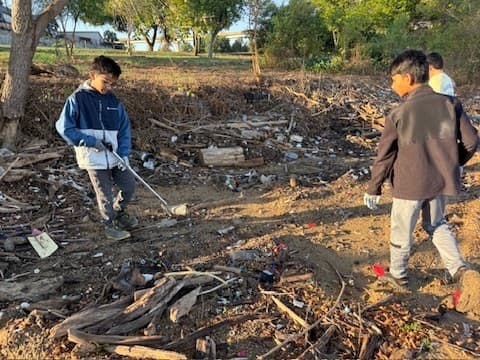
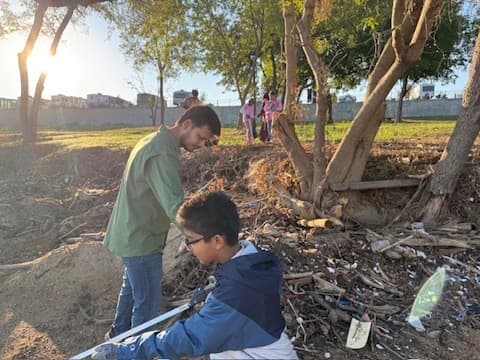
Using gloves, grabbers and collection bags, the students moved across rocky ground and shallow edges of the lake. They removed litter while looking closely at where debris settled — among driftwood, near rocks and at the point where land meets water.

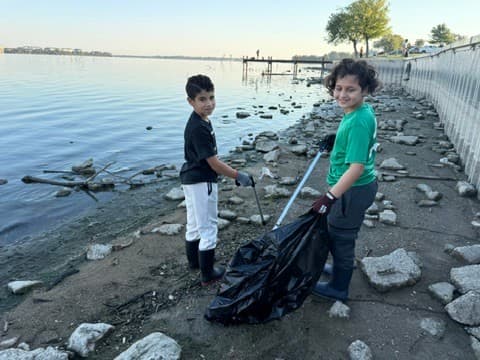
The cleanup gave the team a view that classroom discussion alone could not provide. Students could see the scale of the shoreline, the uneven terrain and the many places where trash can become trapped before or after it reaches the lake.
That direct experience now becomes part of the team's design process. Their innovation project is focused on finding a practical way to prevent trash from flowing into Lake Ray Hubbard.
The shoreline made the design challenge visible
The students' work was more than a cleanup. It was a field study of how litter behaves at the edge of a large urban lake. Photos from the day show debris mixed with natural material, scattered across exposed ground and sitting close to the water.
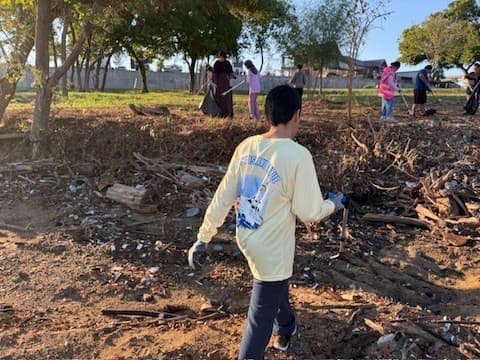
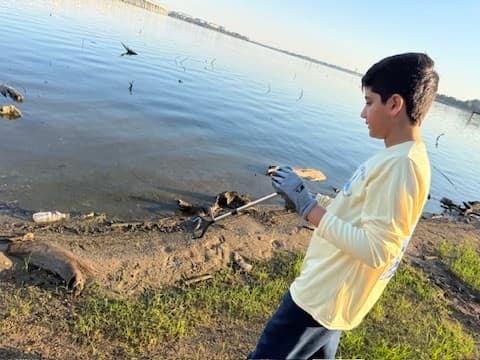
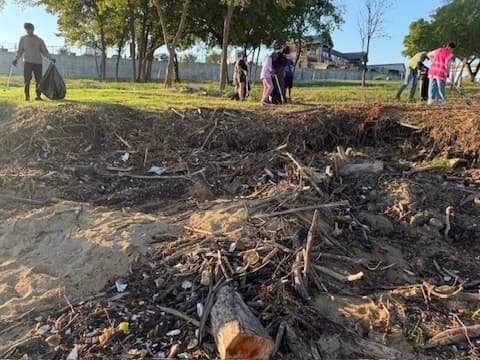
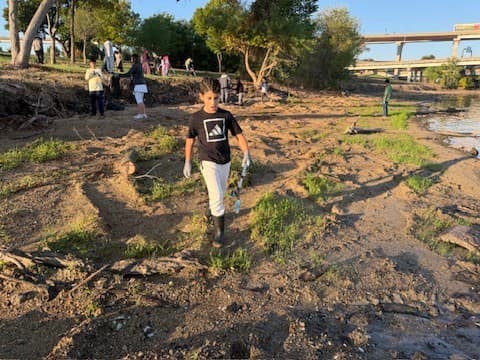
Where trash gathers. Students observed litter near rocks, branches, shallow water and changes in the shoreline.
What a solution faces. Any idea must work around natural debris, uneven ground and changing conditions at the water's edge.
Why fieldwork matters. The cleanup gave students direct observations they can use when they evaluate possible designs.
“The students are moving from seeing the problem to designing a way to prevent it.”
Next, the team will organize what it learned, identify points where trash could be intercepted and develop an idea that can be built and tested. The goal is prevention: stop litter from entering the lake rather than relying only on removing it after it arrives.
More moments from the Lake Ray Hubbard cleanup
Across the cleanup area, students carried bags, used grabbers and searched the waterline and brush for litter. Working alongside adult volunteers, they saw how trash can collect in very different parts of the shoreline.
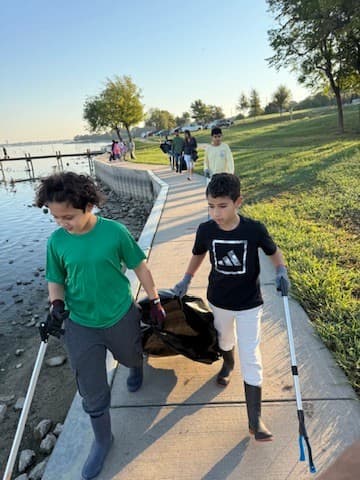
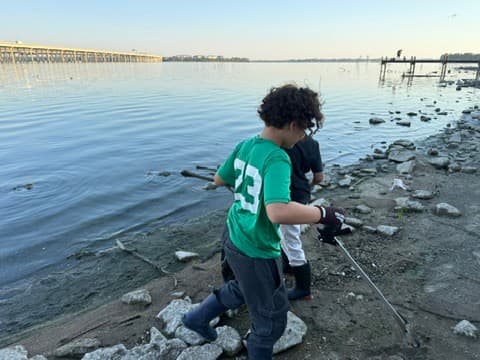
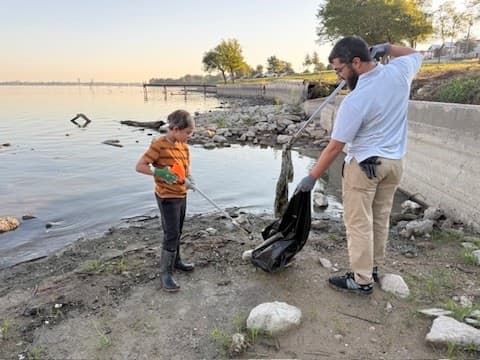
“Every bag collected also gave the students a clearer picture of the problem they want to prevent.”
The field experience will help ITKAN Legends Team 1 judge whether its innovation ideas can meet the real conditions students observed at the lake.
The project belongs to the students driving it forward
ITKAN Legends Team 1 is approaching the biodiversity challenge as a full team. Each student took part in the shared learning behind the project, from seeing shoreline conditions to helping remove litter and discussing what a prevention solution must do.
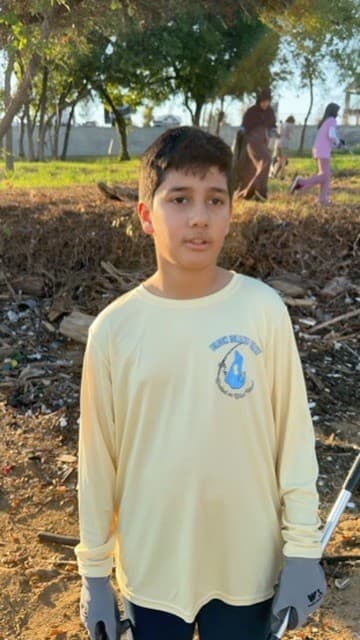
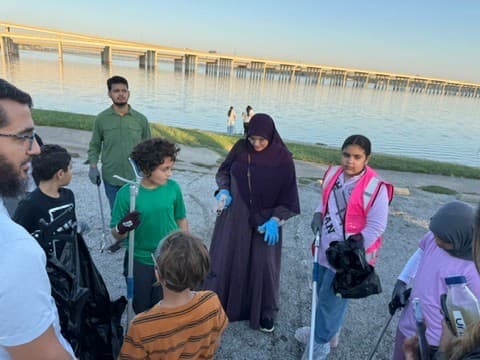
The team's next challenge is to carry the same teamwork into the design phase: define the problem clearly, compare ideas and test a solution that can help keep trash from flowing into Lake Ray Hubbard.
ITKAN strong.